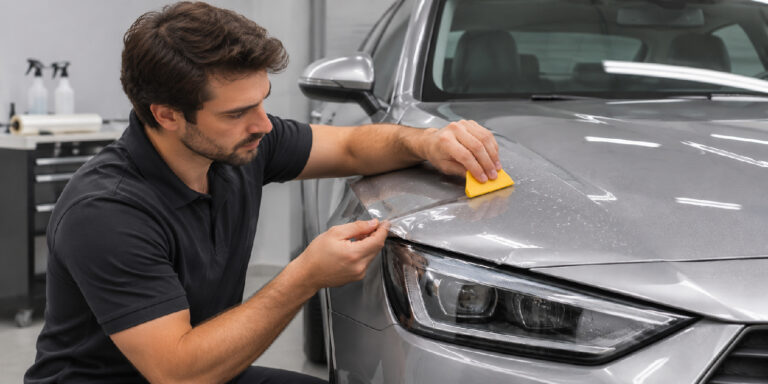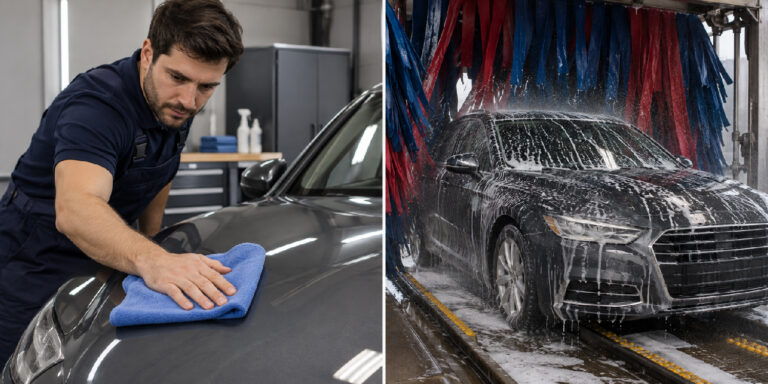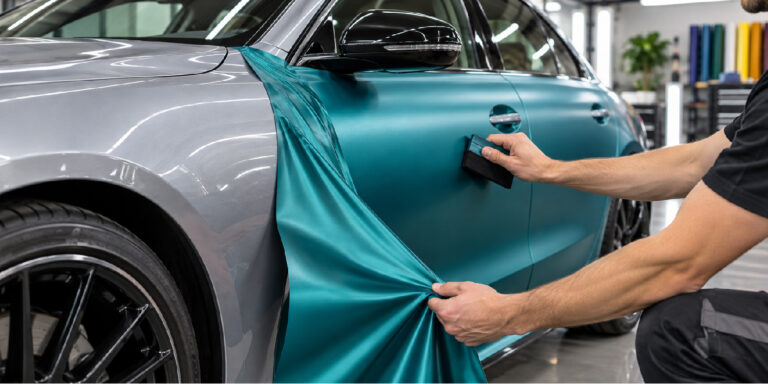
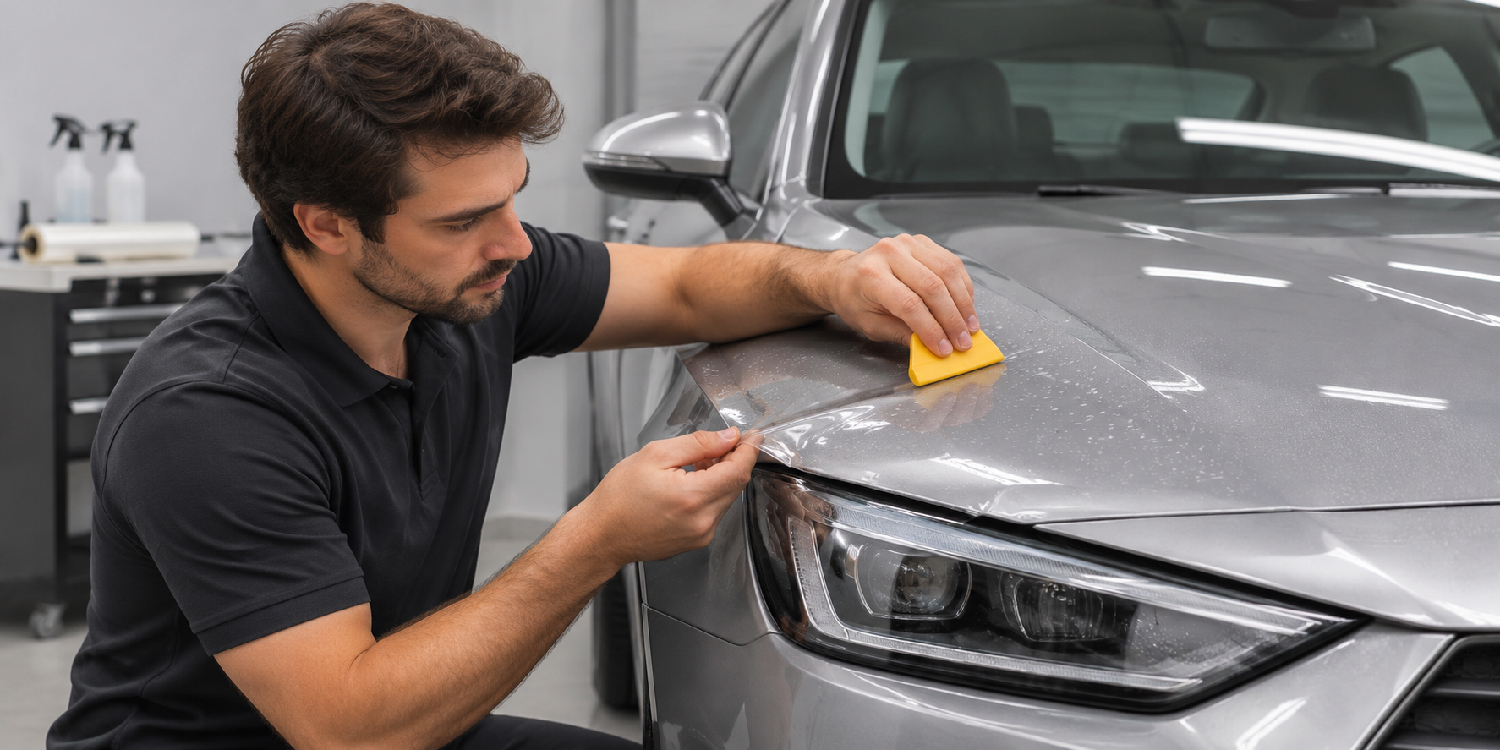
Paint protection film is a transparent thermoplastic urethane layer applied to the vehicle’s exterior to protect it from environmental damage. When you invest in a vehicle, you want to preserve the factory finish for as long as possible. Many environmental factors can damage the vehicle’s paint. Paint protection film acts as a shield on your vehicle.
Paint protection film can be applied to the entire vehicle or to specific areas. If you want to cover only parts of your vehicle, the next logical question is, “Where should you install PPF first?”
Different parts of your vehicle are exposed to environmental risks to varying degrees. Not every panel faces the same level of risk. Covering every inch may not be necessary for every driver. In Canada, vehicles are exposed to many different risks in different seasons. A good strategy recommended by professional car detail shops is to protect the areas that are at the greatest risk. If you are looking for a practical priority guide to help you decide your paint protection film strategy, read on.
Start With the Areas That Face Direct Road Impact
When considering paint protection film, the first step is to identify the highest-risk areas. Your vehicle is not exposed to environmental risks evenly. Some areas take more impact than others. The front bumper is usually the first area to face direct impact. The position of the front bumper puts it directly in the path of stones and debris. The leading edge of the hood is at risk of damage from stone chips, particularly during highway driving. Lower bumper sections sit closer to the road and face additional risk.
The side mirrors are another area to consider. They are commonly exposed to small stones and debris because of their forward-facing position. Loose gravel on winter roads, loose material in construction zones, and debris left behind after harsh weather are common risks that drivers face in Canada. Debris thrown outward by the front tyres can strike the front edges of the fenders. Paint is vulnerable to various factors, whether the vehicle is in moving or parked. Some areas receive impacts with higher frequency. Repeated minor impacts can accumulate damage.
Consider How You Actually Drive
While planning the application of paint protection film, consider the driver’s driving habits. A car that spends most of its time on city streets does not face the same risks as one that racks up kilometres on the highway every week. So the main criteria to consider are where, how often, and how far you typically drive.
Daily highway commuters may want to consider paint protection film on high-impact areas such as the front bumper, hood, fenders, and side mirrors. Vehicles travel at high speeds on highways, and even a small stone chip can cause damage when it hits the vehicle. If you prefer driving behind large vehicles on the highway, you increase your vehicle’s exposure to gravel and loose material. Drivers who regularly drive on rural or gravel roads expose their vehicles to debris kicked up by the tyres.
Another criterion to consider is your parking habits. Drivers who park their vehicles outdoors for long periods may have different priorities from drivers who park their vehicles in garages.
Give Extra Attention to the Front End
As a general rule, the front end is the first line of defence. If you are trying to decide which parts need paint protection film, it would be a good idea to start with the front end. The front bumper covers a large area and can receive impacts from several directions. The lower sections are particularly vulnerable because of their proximity to the road. The hood is another area where debris can strike before passing over the vehicle. The leading edge can take a significant amount of the impact. The painted areas around the grille also deserve attention.
The height and shape of the vehicle should also be considered when deciding where to apply PPF. A low sports car sits closer to the road and may face greater exposure to road debris, while a taller SUV has a different pattern of exposure.
The front end does not need to be covered completely for all vehicles. Identify the areas that are most likely to encounter debris and protect those first.
Don’t Overlook the Areas Around the Wheels
As the tyres rotate, they can throw small stones, mud, and other debris. Repeated exposure can leave marks in areas that are easy to overlook. The front fender near the wheel arch can be highly exposed to direct impacts. The lower sections of the doors can be similarly exposed. Rocker panels are also vulnerable, especially on vehicles that are regularly driven on gravel roads and through wet conditions.
The type of vehicle and tyres can influence the risk of damage, while tyre design can affect how debris is thrown from the wheels. SUV drivers and truck drivers may face greater exposure to damage on lower body panels during everyday driving.
Salt, sand, and gravel on roads can collect around the wheels and be repeatedly thrown against nearby paint.
Think About Canadian Weather and Road Conditions
Where you drive matters, but when you drive can matter just as much. Changing weather conditions in Canada mean your vehicle is exposed to different challenges throughout the year. Winter driving conditions are demanding. Road salt, sand, and gravel can be thrown against the lower sections of your vehicle as you drive. In the winter months, these areas deserve greater attention.
In spring, roads can remain covered with grit and loose material. Potholes and damaged road surfaces can contribute to increased debris on the roads. In summer, construction zones and freshly resurfaced roads can leave loose gravel that poses a risk to exposed paint. Wet weather can cause dirt and grit to be carried onto the vehicle. In warm weather, the front end is exposed to bug splatter and debris.
Look at the Car’s Shape and Design
Two cars travelling on the same roads can have different vulnerable areas because of their shape, height, and exterior design. A sports car that sits closer to the road has a different pattern of exposure than an SUV with greater ground clearance. Wide fenders and pronounced bodywork can create additional surfaces that need to be considered.
The shape of individual panels matters. Sharp edges, exposed corners, and protruding sections may be more vulnerable to chips and everyday wear. Side mirrors protrude from the body of the vehicle and can be damaged by loose debris. Identify the areas that are most exposed and vulnerable to risk based on the design of the car. This makes it easier to plan your PPF coverage.
Prioritise Areas Based on the Cost of Future Repairs
Paint protection film can be a more economical alternative to repainting. Repainting a vehicle takes more time and effort, and may be more expensive. Achieving a perfect paint match can be difficult when repainting panels. Premium finishes can be more expensive to restore. Repainting can be a multi-step process with specialised finishes.
Depending on your driving habits and the shape and size of your car, protecting vulnerable areas with paint protection film can help you avoid heavy repainting expenses.
Conclusion
Many car owners consider paint protection film an effective way to protect their vehicle’s paint. Choosing paint protection film does not mean covering the entire vehicle. A practical approach is to identify areas that are most exposed to environmental elements and protect them strategically by applying paint protection film strategically.
If you are looking for experienced PPF installers in Toronto, visit Colibri Car Wrap and Detailing for premium installation.