Imagine cruising down the highway and enjoying the weekend drive. The weather is great, and you are just living in the moment. A tiny pebble hits the hood out of nowhere and leaves a chip in your paint. Most car owners know the feeling and have felt the sting of a blemish on their car’s finish.
What if your car could heal itself from those everyday hassles? That’s the magic of paint protection film. It is often called the ‘invisible armour’ of the automotive world. The advanced technology of paint protection film is actually self-healing. The film can repair itself from minor damage.
This blog dives into the fascinating science behind paint protection film. It discusses how it works and what makes it self-healing.
What Exactly is Paint Protection Film?
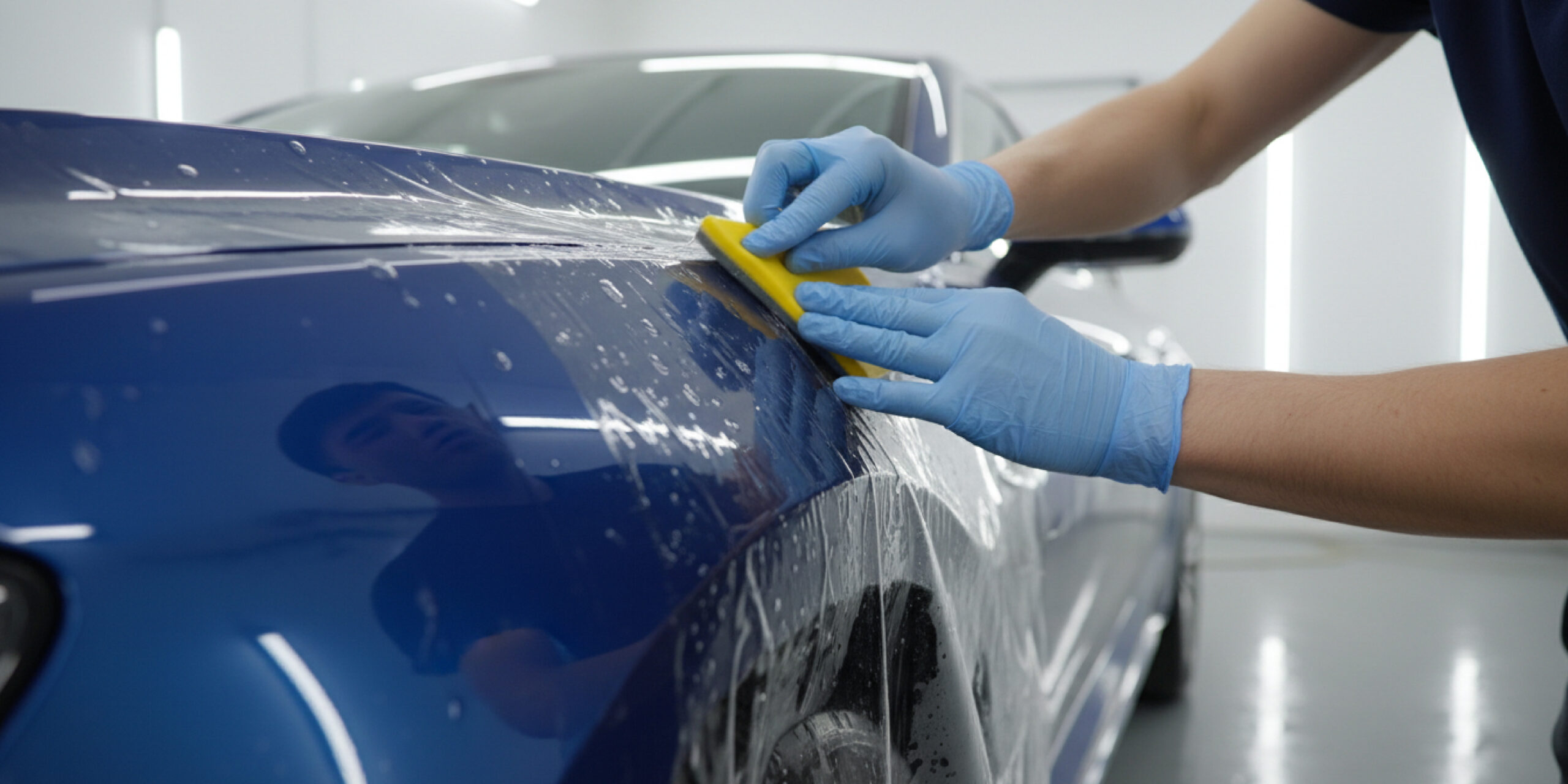
Paint protection film is a thin transparent polyurethane layer applied over the car’s painted surfaces. It acts like a second skin of the car. It is like a shield that protects the car from scratches and chips. It is also an armour against bird droppings, bug splatter, and road debris.
Paint protection film, or PPF, was not originally intended for cars. Paint protection film was invented for the military to protect helicopter rotor blades and sensitive equipment from debris damage. Its durability and flexibility were widely recognised, and its application was extended to other areas. Today, paint protection film protects everything from supercars to daily commuters.
Paint protection film is an invisible layer on the car that buffers it from any minor scratches. It takes hits so that the paint does not have to.
The Layer of Protection: What’s Inside PPF?
Paint protection film is not a single layer of film. It is a multi-layered film, incorporated with the latest engineering innovations. Each layer of the film has a specific job, and together all the layers work to make the film tough yet flexible.
Top coat (Self-Healing Layer)
The top layer is the key player. It is responsible for the self-healing magic of paint protection film. It is made of an elastomeric polymer that can flex, stretch, and recover its shape when exposed to heat.
Base Layer (Urethane Film)
This is the middle layer that is the backbone of the film. It gives the film its strength. It is made of urethane, which is a resilient material that can absorb impact from road debris. It can absorb shock from small stones without cracking or tearing.
Adhesive Layer
This is the bottom layer that bonds the film to the car’s paint surface. It is a strong adhesive that adheres the film to the surface without damaging the paint when removed.
PPF is a high-tech film with advanced technology. The top layer heals, the middle layer absorbs, and the bottom layer attaches it securely to the car surface.
The Magic of Self-Healing
The self-healing property of paint protection film is due to the elastomeric polymer in the top coat. This polymer has molecular memory. When the film experiences a scratch or swirl mark, the polymer chains stretch, but they tend to return to the original shape.
When they are exposed to heat in the form of sunlight or warm water, the molecules become more mobile and align to fill the tiny grooves caused by scratches.
The film has a memory of its form before the damage and tends to restore its original form. With a little bit of heat, it resets itself. The result is a remarkable recovery from light scratches and swirl marks. Even fingernail marks near handles fade away within minutes.
Why Paint Protection Film is Scratch-Resistant, not Scratch-Proof
It is a common misconception that paint protection film is scratch-proof. There is a difference between scratch-proof and scratch-resistant. PPF does not guarantee against deep cuts from sharp objects or scraping. That kind of damage can still leave a mark or pierce the film.
What PPF does is that it can absorb everyday abrasions such as light contact, swirl marks, or road grit. It can absorb the impact due to its elastic nature and restore its original form. This trait of the film protects the car’s paint from damage.
The Role of Heat, Sunlight, and Time in Self-Healing
Heat plays the role of a catalyst in the self-healing property of paint protection film. When you wash your car with warm water or leave your car in direct sunlight for a long time, it heats the film’s polymers and softens them. This allows the molecules to realign back to their original form.
The process can happen passively through ambient heating. Ambient heating can trigger recovery.
Healing of the paint protection film does not require any inputs. There is no need to polish, wax, or treat the film. The healing of the film is a feat of technology and happens naturally.
Parking under mild sun helps the recovery of PPF. Hot water can speed up scratch recovery. Over time, the film remains flexible and retains its gloss.
The Technology Behind the Gloss
Although paint protection film is primarily known for its role in protecting the car’s paint, it can also enhance the vehicle’s appearance. High-end films are engineered for optical clarity. They do not dim or dull the colour of the car’s paint. They usually enhance the paint colour. This is possible because the film refracts light evenly.
The film is embedded with UV stabilisers that prevent the paint and the film from yellowing and fading over time. Constant sun exposure could erode the brilliance of the colour, especially in tropical climates. PPF acts as a layer that filters out harmful rays while letting the car’s colour shine through.
These films come in satin and matte finishes, too.
Future Innovations
Paint protection film has come a long way, and there is still a long way to go. Manufacturers are experimenting with nano-technology-based PPF that offers ultra-fast healing instantly on contact with heat. Research is underway to blend ceramic coatings and PPF to combine hydrophobic (water-repellent) properties with protection.
Coloured and textured-rich PPF are also on the rise. This allows you to change the car’s look while shielding it. The options for PPF are numerous- from matte, gloss, and satin to colour-shifting films offering more scope for personalisation.
The next step would be a film that not only heals itself but also repels dirt and grime without a wash. With science and style merging beautifully, car owners can look forward to exciting innovations.
Conclusion
The science behind paint protection film is brilliant. It combines flexible polymers, heat-responsive molecules, and UV-resistant technology to create a tough and transparent film that gives your car the ability to heal and shine.
It is like an armour that protects the car’s paint from everyday damage. Paint protection film has advanced technology to self-repair and defend the car’s paint.
If you are a car owner, then PPF is the best protection for your car’s paint. Enjoy your weekend drives without a care.
At Colibri Car Wrap and Detailing, science and style come together so that your car stays flawless for years to come.